Product Summary
GRP Angles are pultruded fibreglass (FRP) structural sections used for framing, support, edge protection, and secondary structural applications in demanding industrial and infrastructure environments.
Compared to steel, GRP angles offer excellent resistance to corrosion, chemicals, moisture, and UV exposure, while remaining electrically non-conductive and lightweight. This makes them particularly suitable for safety-critical or hard-to-access environments where maintenance needs to be minimised.
GRP angles can be used as standalone components or integrated into wider GRP systems such as walkways, platforms, fencing, handrails, and access structures.
Compared to traditional steel angle sections, GRP angles offer excellent resistance to corrosion, chemicals, moisture, and UV exposure, with no requirement for painting, coating, or corrosion treatment throughout their service life.
As a non-metallic material, GRP angles are electrically non-conductive and magnetically transparent, making them particularly suitable for use around high-voltage equipment, substations, rail infrastructure, and sensitive electronic environments.
GRP angle sections are frequently used as part of complete GRP systems, including walkways, platforms, handrails, fencing panels, and access structures, or as standalone structural components where weight reduction and ease of installation are important.
Suitable Applications
GRP angle sections are widely used across structural, industrial, and access applications, including:
-
Walkway and platform frameworks
-
Handrail and balustrade systems
-
GRP fencing and screening structures
-
Cable management supports and brackets
-
Plant access, ladders, and secondary steelwork replacement
-
Water treatment works and utility installations
-
Rail, highways, and electrically sensitive environments
Key Benefits of specifying GRP Angles
-
Non-Conductive – Electrically safe for use around high-voltage or sensitive equipment
-
Corrosion & Chemical Resistant – Suitable for aggressive, coastal, or industrial environments
-
Lightweight – Easier handling and faster installation than steel
-
High Strength & Dimensional Stability – Consistent performance from pultruded manufacture
-
Low Maintenance – No painting, coating, or corrosion treatment required
-
Long Service Life – Reduced whole-life and maintenance costs
This makes GRP angles a preferred solution for infrastructure, utilities, and industrial projects where safety and durability are critical.
Why specify GRP Angles?
GRP angle sections are increasingly specified as a direct replacement for traditional steel or aluminium angles in environments where corrosion resistance, electrical safety, and reduced maintenance are essential.
Unlike metal angle sections, pultruded GRP angles do not rust, corrode, or degrade when exposed to moisture, chemicals, or UV radiation. As a non-metallic material, GRP is electrically non-conductive and electromagnetically transparent, making it particularly suitable for substations, rail corridors, utilities infrastructure, and high-voltage environments.
The lightweight nature of GRP angles also reduces handling, transport, and installation time on site, helping to lower whole-life costs without compromising structural performance.
Can we help with your project requirements?
Contact our technical team for advice, quotations, specification support, or assistance selecting the correct GRP angle profile for your application.
Technical Summary
-
Material: Glass Reinforced Plastic (GRP / Fibreglass)
-
Manufacturing process: Pultrusion
-
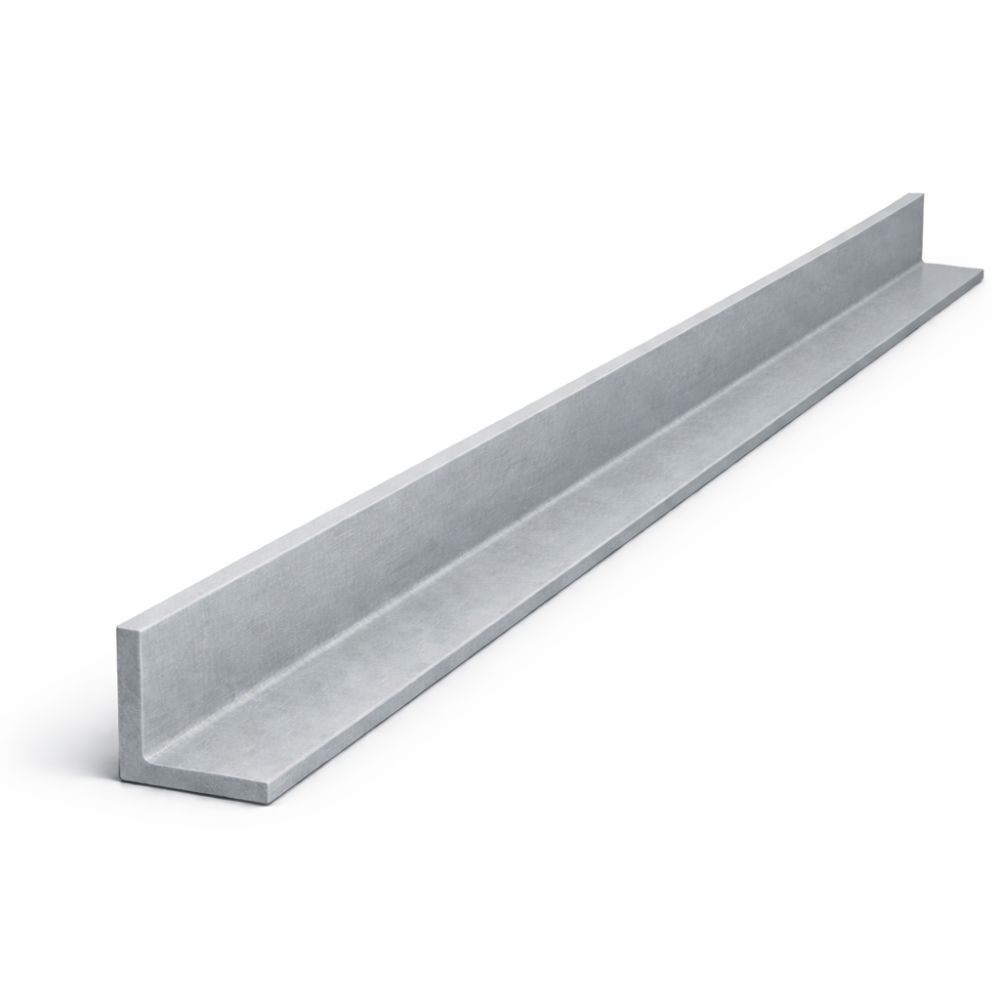
Profile type: Angle section (L-profile)
-
Finish: Standard industrial GRP finish
-
Electrical properties: Non-conductive
-
Corrosion resistance: Excellent
Full material data and load information available on request.
Material data, load tables, and compliance information can be provided to support project specifications and approvals.
Typical Profiles & Sizes
GRP angles are available in a wide range of leg sizes and thicknesses to suit structural and secondary support applications.
Common GRP angle sizes include equal and unequal leg profiles, with options suitable for light-duty framing through to heavier structural support.
GRP angle sections are available in equal and unequal leg profiles, with a wide range of leg sizes and thicknesses to suit structural, secondary support, and edge protection applications.
Profiles can be supplied in standard stock lengths or cut-to-length to suit installation requirements, helping to reduce waste and installation time on site.
If you are unsure which GRP angle size or section is suitable for your application, our technical team can assist with selection based on load requirements, environment, and intended use.
Environmental Performance
GRP angle sections perform exceptionally well in environments where metal sections typically fail. Their resistance to corrosion, moisture ingress, UV exposure, and chemical attack makes them suitable for long-term use in coastal, industrial, and water treatment environments.
As a non-conductive material, GRP angles are widely used in electrically sensitive locations such as substations, rail corridors, utilities infrastructure, and high-voltage installations, where electrical safety and isolation are essential.
Can we help with your project requirements?
Non Slip Shop supplies GRP angles as individual components or as part of complete GRP systems, including walkways, platforms, fencing, handrails, and access structures.
Our technical sales team can assist with:
-
Profile selection and sizing
-
Load considerations and suitability
-
Cut-to-length requirements
-
Pricing and lead times
-
Project and infrastructure support
Contact our technical team for advice, quotations, or specification support.