Tactile Paving Guide
Tactile Paving Guide
Guidance on the use of Tactile Paving in the United Kingdom
The Department for Transport have released a clear and concise document to inform guidance on the use of tactile paving surfaces.
This includes clear guidance for all of the following styles:
-
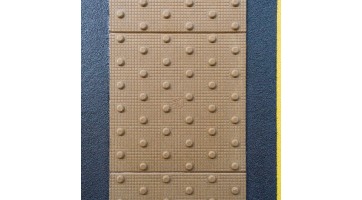
Guidance Path Tactiles - Blister surface for pedestrian crossing points.
-
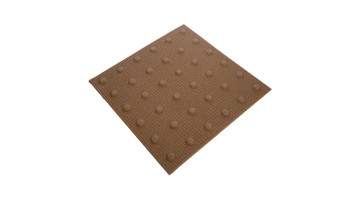
Blister Surface Tactiles - For Pedestrian Crossing Points
-
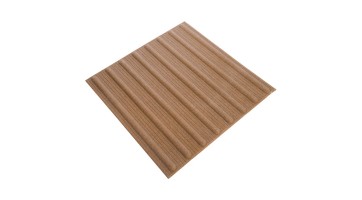
Corduroy Hazard Warning Surface Tactiles - The corduroy surface conveys the message ’hazard, proceed with caution’.
-
Platform Edge (Off Street) Warning Surface Tactiles - To warn visiually impaired people of the edge of all off-street rail platforms.
-
Segregated Shared Cycle Track / Footway Surface and Central Delineator
Non Slip Shop offer full support for your own project and intended applications.
You can download the useful guide by clicking here.
What are the types of tactile paving?
These surfaces are typically made of concrete, polyurethane, cast iron, ceramic, or plastic and are designed to be easily detected underfoot or by using a cane.
Tactile paving surfaces are often used at the edges of roads, train platforms, and other places where there is a potential for people to accidentally walk into a hazardous area.
The raised bumps on the surface help to alert visually impaired individuals to the presence of a potential danger and can help them to navigate more safely.
There are several types of tactile paving surfaces, including:
-
Surface mounted tactiles: These are tactiles that are installed on top of the existing surface, without the need for cutting or modifying the underlying material.
-
Recessed tactiles: These are tactiles that are installed in a recess that is cut into the surface, allowing the tactile to be flush with the surrounding material.
-
Cast-in-place tactiles: These are tactiles that are cast directly into the surface during the construction or paving process.
-
Raised pavement markers: These are tactiles that are installed on the surface of the pavement, using adhesive or mechanical fasteners.
-
Studded tactiles: These are tactiles that are installed on the surface of the pavement and consist of individual studs that are spaced apart to create a tactile surface.
-
Modular tactile paving systems: These are tactiles that are made up of individual tiles or panels that can be easily installed on the surface of the pavement.
What are the benefits of Surface Mounted Tactile Paving?
There are several benefits to using surface mounted tactiles, including:
-
Easy installation: Surface mounted tactiles can be easily installed on existing surfaces without the need for major modifications or construction work. This makes them a convenient and cost-effective option for improving the safety of a space.
-
Versatility: Surface mounted tactiles can be used on a wide range of surfaces, including concrete, asphalt, and other types of pavement. This makes them a flexible option for different types of environments and applications.
-
Durability: Surface mounted tactiles are typically made of durable materials, such as cast iron or ceramic, which can withstand heavy foot traffic and harsh weather conditions. This makes them a long-lasting solution for improving the safety of a space.
-
Cost-effectiveness: Surface mounted tactiles are generally less expensive than other types of tactile paving systems, making them a cost-effective option for improving the safety of a space.
Overall, the use of surface mounted tactiles can provide a convenient, durable, and cost-effective way to improve the safety of a space for visually impaired individuals.
Who invented tactile paving? A timeline on the innovation of tactile paving surfaces:
Seiichi Miyake was a Japanese inventor who is best known for developing the tactile paving system for visually impaired individuals.
In the 1960s, Miyake was working as an engineer at the Japan National Council of Public Welfare when he became concerned about the safety of visually impaired people who were trying to navigate busy streets.
In 1967, Miyake invented a system of raised bumps on the ground that could be felt underfoot, providing a warning to visually impaired individuals when they were approaching a potentially hazardous location. This system, known as tactile paving, is now used in many countries around the world to help visually impaired individuals navigate safely in public spaces.
In 1971, a Canadian organization called the Canadian National Institute for the Blind (CNIB) published guidelines for the design and use of tactile paving. These guidelines were later adopted by other countries and helped to standardize the use of tactile paving surfaces. Today, tactile paving is used in many countries around the world to help visually impaired individuals navigate safely in public spaces.
In 2000's the tactile paving surface was further developed to a surface mounted tactile paving surface, which is now being adopted worldwide. This continues the style and use of the traditional tactile surface, but allows for quicker installation and a longer lifespan with the hope these can be adopted faster across the world.